Richard Batt |
What the EU AI Act Means for UK Businesses Working with European Clients
Tags: AI Governance, Regulation
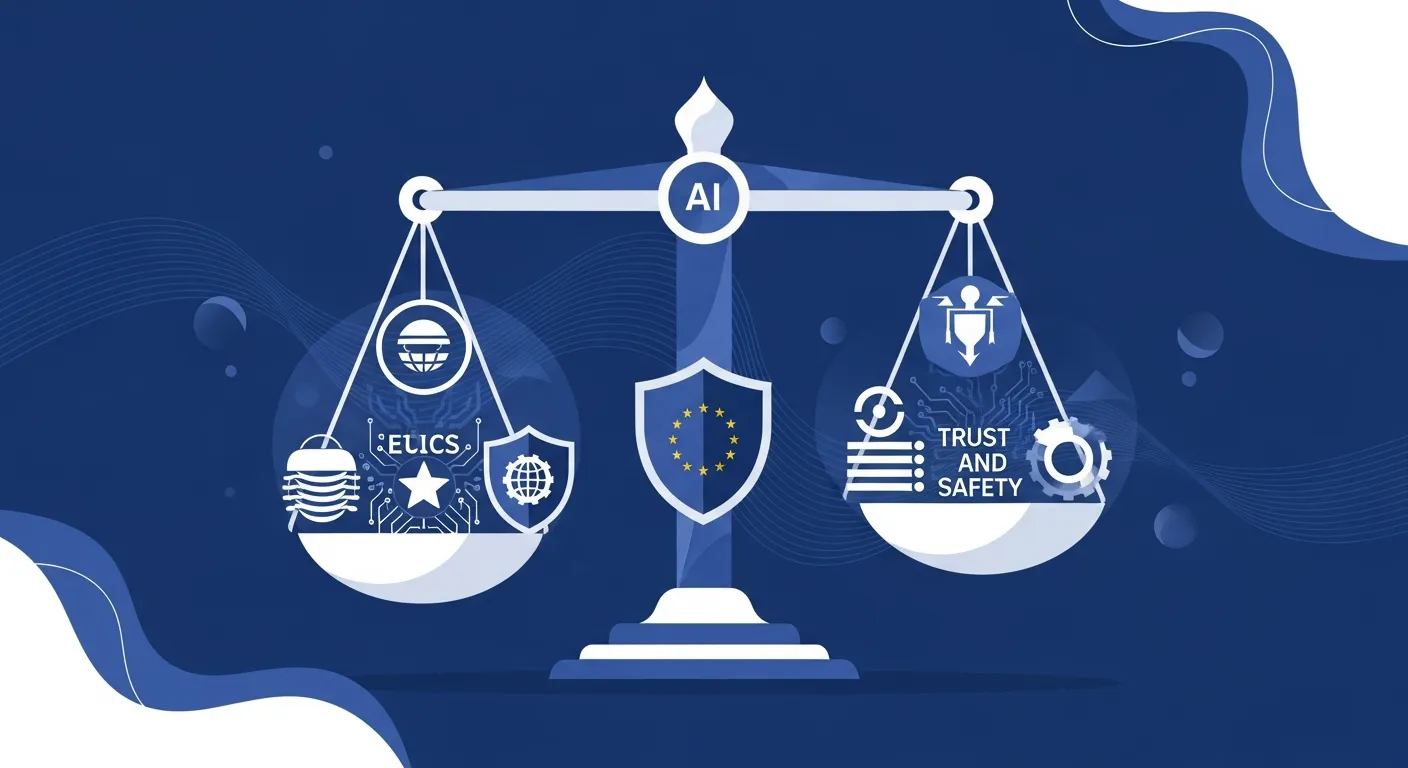
The EU AI Act went live. UK businesses think it doesn't matter. They're wrong.
Key Takeaways
- What the EU AI Act Actually Is.
- Which UK Businesses Are Actually Affected.
- The High-Risk Classification and What It Means Operationally, apply this before building anything.
- A Practical Compliance Approach.
- What Regulators Are Actually Checking.
I've seen this pattern on 120+ projects. UK businesses assume the EU AI Act is an EU problem. It's not. If you serve EU clients, process data of EU residents, or have any customers who have to comply with the regulation, you're affected. Post-Brexit doesn't mean post-regulation. Understanding what applies to you and building compliance into your AI systems from the start is now table-stakes for doing business across Europe.
What the EU AI Act Actually Is
Let me establish clarity on what we're actually talking about. The EU AI Act is regulation that came into effect in 2024 and is being phased in across 2024-2027. It applies to any AI system used in the EU or affecting EU residents. It doesn't matter where your company is based. It doesn't matter where your servers are. If your AI system works by EU customers or processes data of EU citizens, you need to comply.
The regulation uses a risk-based classification framework. It identifies four categories of AI systems: unacceptable risk (banned), high-risk (heavily regulated), limited-risk (some transparency requirements), and minimal-risk (essentially no special requirements).
Unacceptable risk systems are banned. These are things like social credit systems or AI designed to manipulate children's behaviour. If you're building those systems, you have bigger problems than regulatory compliance.
High-risk systems require detailed governance. These include AI used in recruitment, credit decisions, law enforcement, and other areas where the stakes are significant. High-risk classification means extensive testing, documentation, validation, bias monitoring, and human oversight. Most business-critical AI systems will likely fall into this category.
Limited-risk systems need transparency. If you're using AI in customer-facing ways where people are interacting with it, they need to know it's AI. That's mostly what this category requires.
Minimal-risk is everything else. Basic spam filters, recommendation systems, that sort of thing.
The practical impact: if you're building any AI system that makes decisions affecting people, you need to understand which category it falls into and what that category requires.
Which UK Businesses Are Actually Affected
Let me be specific about who this applies to, because this is where organisations get confused. You're affected if any of the following are true:
You have customers based in the EU. You build AI systems for those customers. You process data of EU residents. You sell software or services that EU customers use. You have a subsidiary in the EU. Any of these conditions means the regulation applies.
I worked with a UK software company that thought they weren't affected because they didn't have offices in the EU. But they had 200+ paying customers in the EU using their platform. That meant they were fully subject to the regulation. When they realised this, they had to go back through their product and systematically ensure compliance. That was six months of work that could have been built in from the start.
You're probably also affected if you're doing B2B work with UK companies that have EU customers or subsidiaries. If you're providing AI systems or consulting on AI implementation to companies that need to comply, you need to understand what compliance looks like.
You're not affected if: you have no customers in the EU, you don't process EU resident data, and you don't work with companies that do. That's a very small universe of UK businesses.
The High-Risk Classification and What It Means Operationally
Most business-critical AI systems will be classified as high-risk. The regulation defines this to include systems used in recruitment, credit decisions, loan origination, insurance pricing, employee monitoring, and educational assessment. If you're building AI that affects significant decisions about people, it's high-risk.
High-risk classification requires: a documented risk assessment; validation that the system doesn't create unacceptable risk; testing for bias and discrimination; documentation of training data and model behaviour; human oversight systems; post-deployment monitoring for degradation or bias; incident reporting; and user documentation explaining how the system works and its limitations.
I worked with a financial services company that discovered their credit assessment AI was high-risk under the EU AI Act. They'd built the system pragmatically, it worked, it was reasonably accurate, but they'd never formally validated it for bias. So they had to do that: test the model's performance across demographic groups, identify disparities, and either fix them or document them as accepted trade-offs. This was genuinely important work. The testing revealed that the model was performing poorly for self-employed applicants from certain regions. That was a real business issue they'd missed because they hadn't systematically looked for it.
The compliance cost for high-risk systems is non-trivial. You're looking at: external audit or validation (£10,000-£50,000+ depending on complexity), documentation work (80-200 hours), testing and bias analysis (40-120 hours), governance process implementation (20-60 hours). But spread across the lifetime of the system, that's usually acceptable. What's not acceptable is discovering you need to do all of this work after you've already deployed.
A Practical Compliance Approach
Here's how I recommend thinking about this if you're a UK business building AI systems:
First: Classify your systems. For each AI system you have, determine whether it's high-risk, limited-risk, or minimal-risk under the EU AI Act. The Act provides a detailed list of high-risk applications. If you're not sure, err on the side of classifying as high-risk. The compliance cost of being over-cautious is lower than being caught under-compliant.
Second: For high-risk systems, build a compliance roadmap. What validation do you need to do? What documentation is missing? What governance processes do you need? What external support do you need? Put a timeline on it. Don't try to do everything at once; sequence the work in a way that makes sense for your business.
Third: For new systems, build compliance in from the start. Don't build systems first and retrofit compliance. Design systems with compliance in mind from day one. This means: thinking about how to validate before you even start development; planning for bias testing; documenting your approach to data handling; building explainability into the system design.
One insurance company I worked with completely changed how they approached AI system development after the regulation came in. Instead of building a system and then testing it, they now work backwards from compliance requirements. What validation needs to be true? What testing needs to happen? What documentation requires? Then they build the system in a way that makes those tests easy. This actually made their development faster because it forced clarity about requirements upfront.
Fourth: Document everything. Documentation is the currency of regulatory compliance. You can have the most careful system in the world, but if you can't demonstrate that you've done the work, you're still non-compliant. Keep records of: model training data and decisions about that data; testing results and how you interpret them; validation approaches and findings; governance decisions and who made them; incidents and how you handled them.
Fifth: Get external validation if you're uncertain. If you're not sure whether your system is high-risk, or you're not confident in your compliance approach, get an external review. This costs money upfront but saves the cost of discovering problems when a customer audits you or a regulator investigates.
What Regulators Are Actually Checking
Regulators in the EU aren't going to audit every company immediately. But they are starting to investigate, and they're focusing on specific sectors first: financial services, employment, insurance, and public services. If you operate in these sectors and serve EU customers, you should assume you'll be audited eventually.
When they do audit, they're checking: is the system classified correctly? Is the documentation adequate? Was validation actually done? Is the system behaving as documented? Are there bias monitoring systems in place? Is there an incident response process?
The companies that will have problems are the ones that: don't know what their system is doing, haven't documented their approach, haven't validated the system, or have validation that contradicts their documentation. Basically: the companies that haven't done the work.
The companies that will be fine are the ones that: have clear documentation, have done proper validation, can explain their approach coherently, and have evidence of ongoing monitoring and governance. The work looks like governance work, not extra work. It's the normal rigour you'd apply to any business-critical system anyway.
The Commercial Implications
Here's why this matters beyond just regulatory compliance. EU customers are increasingly asking for evidence of EU AI Act compliance before they sign contracts. I've seen large contracts stall because the customer's legal team wants proof that the AI systems are compliant. Companies that can provide that proof move faster. Companies that can't face delays or lose deals.
One UK B2B SaaS company I worked with actually turned their EU AI Act compliance into a marketing advantage. They published their compliance approach. They audited their systems. They got independent certification. When customers asked about compliance during procurement, they could say: "Yes, and here's the evidence." Their competitors said: "We'll figure it out." My client won more deals.
There's also a talent angle. European engineers and product managers increasingly care about working on systems that are built responsibly. When you can say you've built a system with proper validation and governance, you're more attractive to that talent pool.
What You Should Do Now
If you're a UK business building or deploying AI systems, here's what I recommend:
First: Understand which of your customers are in the EU and what data you process for them. This determines scope.
Second: Go through each of your AI systems and classify them. Are they unacceptable, high-risk, limited-risk, or minimal-risk under the EU AI Act?
Third: For any high-risk systems currently in use, audit whether they're actually compliant. This should take 40-80 hours per system depending on complexity. Document what you find.
Fourth: Build a roadmap for bringing non-compliant systems into compliance. This might be: immediate fixes for critical issues, medium-term work on validation, longer-term work on governance processes.
Fifth: For any new systems in development, factor in compliance requirements from day one.
Sixth: Consider getting an external review if you're operating in regulated sectors (financial services, insurance, employment) or if you're uncertain about your compliance approach.
This isn't optional work. It's regulatory compliance. The cost of not doing it is: customer contracts at risk, regulatory fines when enforcement happens, reputational damage, and the friction of emergency remediation when you discover a compliance gap mid-contract.
If you're operating in the EU or serving EU customers,let's discuss what EU AI Act compliance actually looks like for your specific systems and business model. I can help you assess your current systems, identify compliance gaps, and build a roadmap to address them. This is increasingly table-stakes for doing business across Europe; getting it right from the start is the smart play.
Frequently Asked Questions
How long does it take to implement AI automation in a small business?
Most single-process automations take 1-5 days to implement and start delivering ROI within 30-90 days. Complex multi-system integrations take 2-8 weeks. The key is starting with one well-defined process, proving the value, then expanding.
Do I need technical skills to automate business processes?
Not for most automations. Tools like Zapier, Make.com, and N8N use visual builders that require no coding. About 80% of small business automation can be done without a developer. For the remaining 20%, you need someone comfortable with APIs and basic scripting.
Where should a business start with AI implementation?
Start with a process audit. Identify tasks that are high-volume, rule-based, and time-consuming. The best first automation is one that saves measurable time within 30 days. Across 120+ projects, the highest-ROI starting points are usually customer onboarding, invoice processing, and report generation.
How do I calculate ROI on an AI investment?
Measure the hours spent on the process before automation, multiply by fully loaded hourly cost, then subtract the tool cost. Most small business automations cost £50-500/month and save 5-20 hours per week. That typically means 300-1000% ROI in year one.
What are the main risks of implementing AI in my business?
The three biggest risks are: data quality issues (bad data in means bad decisions out), lack of oversight (automations running without monitoring), and vendor lock-in (building on a platform that changes pricing or features). All three are manageable with proper governance, documentation, and a multi-vendor strategy.
What Should You Do Next?
If you are not sure where AI fits in your business, start with a roadmap. I will assess your operations, identify the highest-ROI automation opportunities, and give you a step-by-step plan you can act on immediately. No jargon. No fluff. Just a clear path forward built from 120+ real implementations.
Book Your AI Roadmap, 60 minutes that will save you months of guessing.
Already know what you need to build? The AI Ops Vault has the templates, prompts, and workflows to get it done this week.