Richard Batt |
Sydney University Says AI Is Bad at Business Strategy. After 120 Projects, I Agree
Tags: AI Strategy, Business
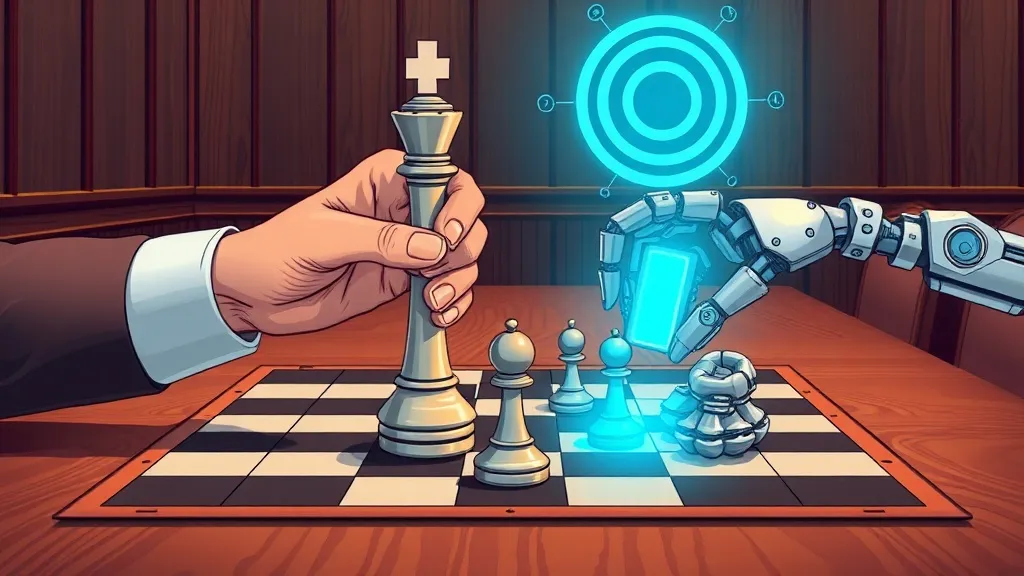
University of Sydney researchers reviewed AI-generated business strategies and found a consistent problem: they looked good but lacked substance. They called it "trendslop." Strategies that synthesized what sounds trendy rather than what solves the actual problem.
This matches what I've seen across 120+ projects. AI is exceptional at execution. At strategy, it's good at making plausible arguments for whatever you already think.
Understanding the difference is critical for how you use AI in your business.
Key Takeaways
- Strategy requires judgment about what matters and what doesn't. AI has no judgment. It generates plausible-sounding synthesis.
- AI can generate consulting-style reports that look strategic. They're usually recombinations of existing frameworks with no original insight.
- The right way to use AI: 80% execution (where it excels), 20% human strategic thinking (where it fails).
- From 120+ projects, I've built a framework for which strategy work AI should touch and which should stay purely human.
Why AI Strategy Is Trendslop
Strategy is about making choices. What market should we enter? What problem should we solve? What should we build next? These choices require judgment: understanding context, knowing what to ignore, recognizing what's actually novel versus what's been tried before.
AI can't do this because AI doesn't have context. It has patterns. It sees that technology companies often talk about "synergy" and "scalability" and "market fit" and generates strategies using those words. The strategy sounds plausible. It's also generic.
A $25/month tool called Rocket AI generates "consulting-style" business reports. It's useful for synthesis but not strategy. It takes public information, frames it with popular business frameworks, and packages it as insight. That's not consulting. That's report generation.
Real strategy requires asking: What does this business actually need? What are competitors not doing? What's being ignored? Where is there an opportunity that requires judgment to see?
AI can't ask those questions. It can only answer questions you already know to ask.
Practitioner Insight: Where AI Strategy Advice Goes Wrong
I worked with a SaaS founder who fed ChatGPT their product roadmap and asked for strategic direction. The model returned five pillars: improve user experience, expand market reach, build partnerships, optimize unit economics, and invest in brand. All true. None specific. None strategic.
He paid an actual consultant $15K. The consultant asked three questions: (1) Which of your customers are most profitable? (2) What do your best customers actually want that you're not building? (3) What are your competitors ignoring? The strategy that emerged was completely different: build deeper into vertical market A, double down on integration, abandon the horizontal market play.
AI's strategy: become bigger and better. Consultant's strategy: become focused and valuable in a specific direction. Different quality entirely.
Another example: An e-commerce business asked Claude for growth strategy. The response emphasized omnichannel, personalization, and customer loyalty. Standard stuff. The actual strategic opportunity? Their data showed 60% of revenue came from five product categories. They were investing equally across 50. Strategy: ruthlessly focus. Stop trying to be everything. Become the best in five things.
AI missed this because it wasn't in the training data patterns. The human consultant saw it by asking specific questions about the actual business.
What AI Actually Does Well (And Doesn't)
AI excels at: Execution. Writing. Analysis. Synthesis. Finding patterns in data you give it. Generating options. Drafting. Iterating. All the 80% work.
AI is terrible at: Strategy. Judgment. Context. Knowing what to ignore. Recognizing what's truly novel. Making hard choices. Being wrong on purpose. All the 20% work that actually shapes outcomes.
The mistake most businesses make: they ask AI for strategy. Then they're surprised when it returns plausible-sounding generic advice.
The right use case: ask AI for synthesis ("Here are five strategic options"), then use human judgment to decide which one is right for your business context.
The Framework for Using AI on Strategy Work
Avoid AI for: Core strategy decisions. Market assessment. Competitive positioning. Business model design. Go/no-go calls. Anything where being wrong costs significantly.
Use AI for preparation: Research synthesis. Competitive analysis summaries. Trend analysis. Option generation. Data compilation. Making the strategic thinking faster by removing busy work.
Use humans for: Problem definition. Option evaluation. Context and judgment. Final decisions. The 20% that actually matters.
Hybrid approach: Use AI to prepare strategic thinking (research, synthesis, draft options). Use humans to decide (which option is right for us? Why? What are we ignoring?).
From 120+ projects, teams that use this model get better strategies and faster. AI handles the research debt. Humans handle the judgment.
Why This Matters
If you're spending executive time doing research and synthesis, AI can free that up. That's valuable. If you're asking AI to do the strategic thinking, you're delegating the part of your job that actually matters. That's problematic.
The University of Sydney researchers got it right: AI generates trendslop. Not because the AI is bad. Because strategy requires judgment, and judgment requires context, and context is the one thing AI doesn't have.
What You Should Do Monday Morning
Audit how you're using AI in strategy work. If you're asking it to make strategic recommendations, stop. Instead, ask it to prepare strategic thinking: synthesize research, generate options, compile competitive data. Then make your own decisions. That's the right division of labor.
You're the strategist. AI is the research assistant. Keep those roles clear and your strategy will improve.
FAQ
Can AI replace business consultants?
For report generation, yes. For strategy, no. A consultant's value isn't synthesizing existing information: that's what AI does. A consultant's value is asking hard questions and helping you see what you're missing. AI can't do that because it has no context about your specific business.
How is AI being used in business?
Three ways: (1) Execution work: writing, coding, analysis (excellent). (2) Preparation for strategic thinking: research, synthesis, option generation (useful). (3) Strategic recommendations (problematic). Most successful businesses use #1 and #2, avoid #3.
What are examples of AI-generated strategies that failed?
Generic recommendations: "improve customer experience," "expand to new markets," "build partnerships," "optimize operations." All defensible. None specific. None account for your actual constraints and opportunities. A strategic recommendation that works for everyone works for no one.
Should I hire a consultant or use AI for strategy?
For core strategy decisions, hire a consultant. For preparation and research synthesis, use AI first. Combine them: AI handles research debt. Consultant helps with judgment and context. Total cost is lower than consultant alone. Quality is higher than AI alone.
How do I know if AI is limiting my strategic thinking?
Red flags: You're accepting AI recommendations without critical evaluation. Your strategy sounds like every other business in your industry. You can't explain why your strategy is right for your specific context. You're doing what looks trendy rather than what solves your actual problem. If three of these apply, AI is limiting your thinking. Stop asking it for strategy. Start asking it for preparation.
Next Step: Build Your Strategic Framework
The line between where AI helps and where it hurts is clear once you see it. I work with business leaders to map that line: what work should stay human (strategy, judgment, context) and what can be delegated to AI (execution, synthesis, research). Get an AI readiness assessment that identifies which strategic work you should keep internal and which execution work AI can handle.
Also get: AI Quick-Wins Checklist, 5 preparation tasks you can hand off to AI this week to free up strategic thinking time.